Ensuring Neurodivergent Students Know When to Listen, and When to Speak
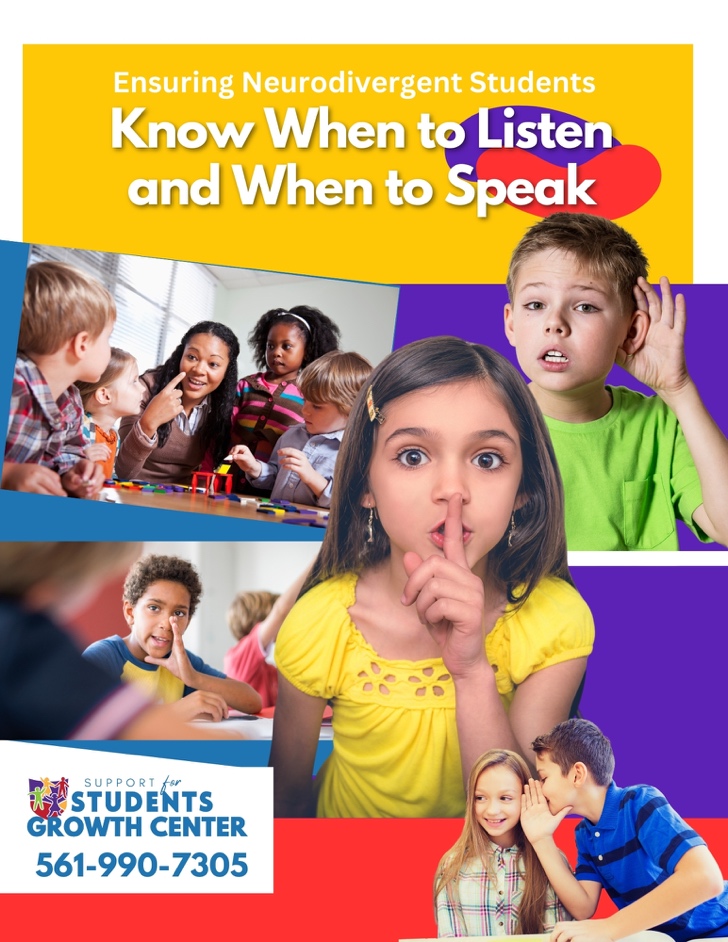
Shhhh…
For one neurodivergent young boy, trying to adapt back to a school environment after summer was proving to be very difficult for him. He hadn’t seen most of his friends all summer, so he wanted to tell them all about his experiences, yet, when he tried, he would often get in trouble. Since he would be story telling while his teacher was speaking or giving instructions, he would not only disrupt the class but miss important information as well. This would then cause him to struggle to complete assignments, know how to solve whatever worksheet was given, and overall begin to already fall behind because he was always talking when he was supposed to be listening.
Not being an active listener also made socializing hard for the young boy. Since he was constantly doing the talking rather than listening what others had to say, it made the other kids not want to interact with him since they could never get a word out. This then caused the young boy to become isolated alongside his academic struggles, and as time went on, he began not wanting to attend school at all. He would avoid it by pretending to be sick, “forgetting” things at home like his projects, homework, and backpack, and even having meltdowns, which caused his parents to reach out to the Support for Students Growth Center for help.
There, he learned tools such as how to identify when it is and is not appropriate to be speaking, how to focus and be attentive to what others are saying, writing down his thoughts on a piece of paper so he won’t forget what he wanted to say when the proper time comes, how to control and regulate his emotions to prevent him from having an outburst and speaking anyway, patience, breathing techniques, and so much more. These tips then helped prevent him from simply blurting things and speaking when it is inappropriate to do so, making school a much more enjoyable experience for him.
If children, teen, and young adults do not have the ability to differentiate between when to speak and when to listen, they will find not only school, but overall life to become difficult to manage. They may be unable to follow directions, be a good friend, complete assignments whether it be for school, chores, or a job, and so much more, all of which will set them back in life. Being able to know when to listen and when to speak can also prevent them from being emotionally overwhelmed with the stress of not being sure when it is appropriate to talk, alongside giving them the confidence, they need to succeed, which the Students Growth Center can help them achieve.
At the Support for Students Growth Center, we provide the social, behavioral, educational, emotional, and executive functioning skills services children, teens, young adults, and their families, who may be Neurodivergent or not need for a happy and successful life in and out of school settings. Our team of professionals offers individualized and family coaching/counseling and social skills groups to help teach skills such as how know when it is time to listen versus when to speak to ensure parents do not have to worry that their kids will be unable to make and maintain a functioning independent life on their own. So, if your child is struggling with skills like the ones listed above and much more, the SSGC is equipped with the tools to help.
Click here and call now to schedule your FREE 20-minute individualized screening
Dr. Eric J. Nach, Ph.D., M.Ed., A.S.D.C., is a Developmental and Behavioral Specialist who specializes in Autism, ADHD and related disorders. Dr. Nach is the founder of the Support for Students Growth Center and College Life Skills Program where he and his team of professional’s help develop the Emotional Maturity, Executive Functioning, Life Skill and Social Abilities of children, teens, young adults and college students and those high school students preparing for college.