Controlling Our Anger
Ugh! But they just make me so mad!
For Lily, controlling her anger was becoming increasingly more difficult as she got older. Now that she was in middle school, she felt as if everything everyone did, no matter how small, made her angry. When at home, if her sibling would come into her room and not leave, she would begin to scream and hit him until he left. At school, if the other kids didn’t want to play her game, she would throw a tantrum until they agreed. No matter what it was, Lily would react in a way that was disproportionate to the situation, and although she felt remorseful after, it would just keep happening. This is when Lilys parents reached out to the Students Growth Center for help.
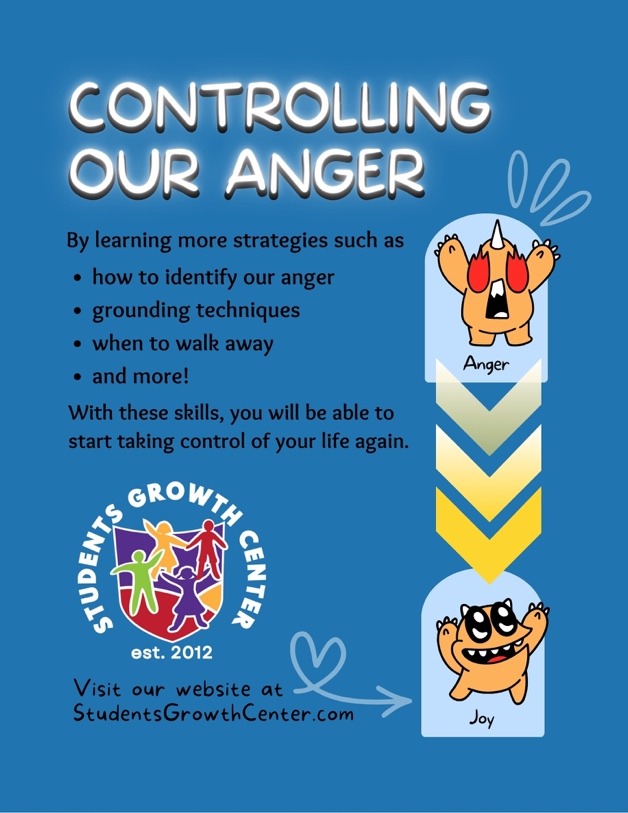
There, she met with a coach weekly to try and prevent her from exploding every time she was angry because of her underdeveloped emotional regulation skills. She learned different strategies such as breathing techniques, when to walk away, how to identify her anger, and more. With these skills and a level of accountability, Lily was able to start taking control of her life again.
Not being able to control our anger while in school can cause many issues for students. Being isolated from peers, kicked out of school and after school programs (sports, clubs, academics), trouble with siblings, and stress at home are all things that can happen if they are unable to emotionally regulate. Students may react disproportionally to things, not because they are not valid in their emotion, but rather that they are letting their emotions control them. Throwing tantrums, hitting things or others, destroying their rooms, and breaking things are ways that children, teens, and even young adults try to express their emotions because they never developed the skills, they needed to control them.
People get angry. It is simply a part of life. We feel many emotions, some good, some bad, and either way we are expected to be able to manage them. It is no secret that managing anger can be difficult. Stopping yourself from lashing out during a time that you are feeling intense negative emotion can feel impossible, but it is not, and it is important that we do so. Our personal, professional, and overall relationships are affected by how well we can control our anger. If we lashed out every time someone didn’t want to play what we wanted to, didn’t like an idea for a project, or hit and broke things every time we were upset, people would begin to not want to hang around as much. Friends wouldn’t want a friend who always explodes whenever they are angry. Peers do not want to work on projects or other things with someone who verbally attacks them when something doesn’t go their way, and as they get older, if they do not fix these issues, employers will not want to give someone a job who cannot control their anger with their coworkers or customers. According to Science Direct, “Majority (41%) of the adolescents expressed their anger by shouting and fighting.” With such a high percentage, it is important that we ensure our children are capable of handling the anger that may come their way, and at the Support for Students growth Center, we can help teach them the skills they need to do so.
At the Support for Students Growth Center, we provide social, behavioral, educational, emotional, and executive functioning skills services children, teens, young adults, and their families need for a happy and successful life in and out of school settings. Our team of professionals offers individualized and family coaching/counseling and social skills groups to help teach skills such as how to control anger to ensure parents do not have to worry that their kids will be unable to make and maintain a functioning independent life on their own. So, if your child is struggling with skills like the ones listed above and much more, the SSGC is equipped with the tools to help.
Click here and call now to schedule your FREE 20-minute individualized screening
Dr. Eric J. Nach, Ph.D., M.Ed., A.S.D.C., is a Developmental and Behavioral Specialist who specializes in Autism, ADHD and related disorders. Dr. Nach is the founder of the Support for Students Growth Center and College Life Skills Program where he and his team of professional’s help develop the Emotional Maturity, Executive Functioning, Life Skill and Social Abilities of children, teens, young adults and college students and those high school students preparing for college.