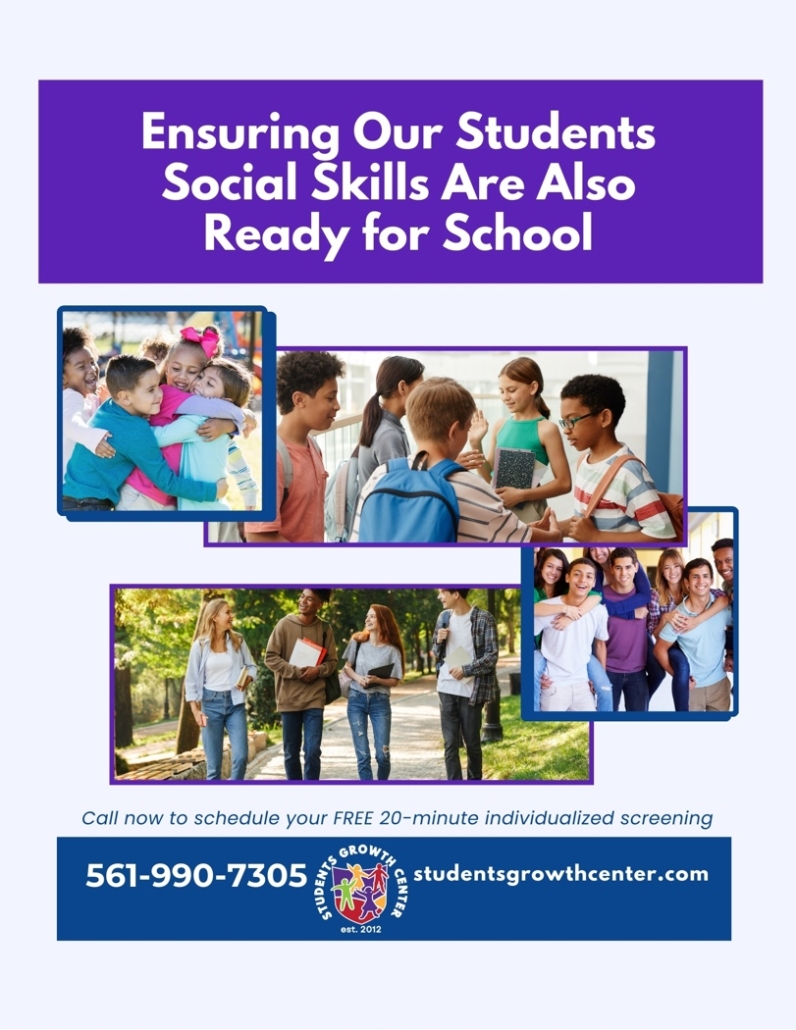
Ensuring Our Students Social Skills Are Also Ready for School
How am I supposed to just know that?…
For one young man, socializing always made him stressed. As if reading verbal cues like tone of voice wasn’t hard enough, nonverbal cues such as body language was too much for him. He felt as if nothing he thought ever actually matched what the person was feeling. As time went on, the young man found himself not even wanting to try to socialize. Rather, he found isolating himself was more comfortable for him because he never had to worry about what another person was thinking or feeling, or having to not only make, but maintain his friendships.
This worked for a few weeks, but as time went on, the young boy realized he was lonely. As he watched his peers play games with one another during free time and recess, he realized he wanted to do that too. So, after school the boy voiced his concerns to his parents who realized that their sons lack of social skills was setting him back. To help with this, they reached out to the Support for Students Growth Center. There, he met with a coach weekly to try and avoid having his underdeveloped social skills prevent him from enjoying his new school year. He learned different strategies such as what body language actually means, how to listen and not just speak, what is and isn’t appropriate to say and ask, and more. With these skills and a level of accountability, the boy was able to start taking control of his social life again.
Social skills are extremely important, especially as we enter a new school year. New school years bring new peers, new teachers, and the possibility to make new friends. However, if our social skills aren’t at the level they should be, making these friends can be difficult. Being able to not only read body language but interpret what they mean in the overall situation is important. It allows us to know what another person is thinking without them speaking before reacting in a way that is appropriate to the situation, such as asking why they are sad, or if they need time to themselves. Other skills such as being an active listener, not only making, but nurturing friendships, respecting privacy and boundaries, etc., are all extremely important when socializing not only in school, but other places as well, like the park or in your neighborhood and just in overall life.
While in school, social skills also help students work well with their peers. Gorup projects are common, and if our skills are not at an age-appropriate level, then they may begin to struggle with compromising and working in a group setting. This can then affect their grade, as well as the relationship they could have had with their groupmates simply because they were lacking certain essential social skills. According to the Marcus Autism Center, “approximately 52 percent of kids with autism spectrum disorder (ASD) don’t have many friends at school,” while CHADD states “50 to 60 percent of children with ADHD have difficulty with peer relationships. Over 25 percent of Americans experience chronic loneliness.” This shows that those without neurodivergent traits can experience difficulties with socialization as well, but it doesn’t mean they cannot learn how to overcome those struggles.
At the Support for Students Growth Center, we provide social, behavioral, educational, emotional, and executive functioning skills services children, teens, young adults, and their families, who may be Neurodivergent or not need for a happy and successful life in and out of school settings. Our team of professionals offers individualized and family coaching/counseling and social skills groups to help teach skills such as how to read body language, actively listen, etc., to ensure parents do not have to worry that their kids will be unable to make and maintain a functioning independent life on their own. So, if your child is struggling with skills like the ones listed above and much more, the SSGC is equipped with the tools to help.
Click here and call now to schedule your FREE 20-minute individualized screening
Dr. Eric J. Nach, Ph.D., M.Ed., A.S.D.C., is a Developmental and Behavioral Specialist who specializes in Autism, ADHD and related disorders. Dr. Nach is the founder of the Support for Students Growth Center and College Life Skills Program where he and his team of professional’s help develop the Emotional Maturity, Executive Functioning, Life Skill and Social Abilities of children, teens, young adults and college students and those high school students preparing for college.